
MRS Inclusive Research Award: Independent Age
At the end of last year we were thrilled to receive the inaugural MRSPride Award for our work with Independent Age, exploring the lived experience of older age amongst marginalised sub-groups. Below we share more insight into the project, our approach and how we strove to ensure inclusivity throughout.
The context
The way society talks about older people and understands the challenges of our ageing population is often based on assumptions about the millions of people aged over 65 – often rooted in visions of Baby Boomer wealth, house ownership, and family support. This largely overlooks the hugely divergent experiences of old age within this far-from-homogenous group.
Independent Age commissioned this research to explore the reality of life for older people whose voices are less heard in debates about ageing. It focused on the experiences of marginalised groups of older people, including those with physical or mental health conditions, those of Black, Asian and minority ethnicity, LGBTQ+ and the ‘older old’, in their eighties and nineties.
The brief was broad: to explore the lives of these groups of older people, understanding their lived experience across a broad range of circumstances, with a focus on three key areas – health and wellness, social connectedness, and financial security.
This insight would allow Independent Age to challenge stereotypes of ageing, understand what people in different situations really want and need for an independent and inclusive future, and put real human voices at the heart of inclusive policy work and service provision.

Our approach
Key to our inclusive approach was engagement with an advisory panel of older people convened by Independent Age, who gave feedback on our methodology and findings to ensure that we were guided at every stage by people close to our target audience.
In the research we talked to a total of 48 people across the UK, representing 6 marginalised groups, a range of ages, a variety of living situations, and rural and urban locations.
We took a creative recruitment approach, using three recruiters each of whom brought different specialisms and methods, to allow us to find relevant populations who do not typically get included in research databases. We then started the process by phoning each participant for a discussion about the research process and objectives, to understand their specific needs and to ensure that they were comfortable participating and could see mutual value in the research.
Wherever possible we had the same member of our team working with each participant throughout the project, so there was a familiar voice and face from the initial briefing call right through to the wrap up process - building a rapport that allowed for some lovely moments of connection.
We engaged the participants over 4 stages:

1. Participatory photography
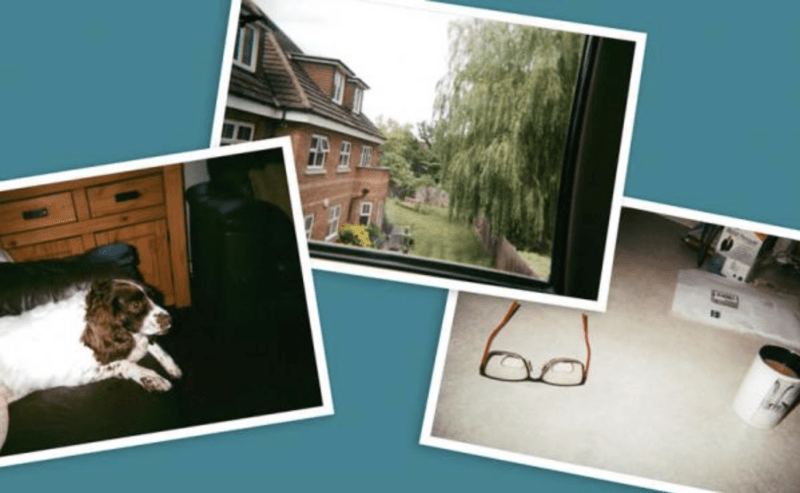
To creatively foreground the voice of participants, we gave each participant a disposable camera and asked participants to capture their life in images over one week. This encouraged unmediated outputs, provided the stimulus for story-telling in the next phase of research and created powerful visual assets for final reports and exhibitions.
During the initial phone call we ensured everyone understood what was involved in this task, and discussed physical or visual impairments that might limit participation, to find workarounds.
2. Follow up in-home interviews
Following the ‘photo voice’ exercise, we went to each person’s home for a 90-minute conversation (with carer / chaperone present if needed).
To be inclusive we used a narrative-led approach, with people telling personal stories around our key themes and discussing their experiences and challenges – focusing on the issues that were significant to them personally. We adapted our interviewing approach to fit individual needs and circumstances. We also used the photos and their surroundings as prompts, aiding memory and helping people open up.
The interviews were captured on video and in first-person transcripts, to ensure findings foregrounded the language and terminology used, not imposed.
3. Interim report and workshop
We then produced a report capturing learnings to date and identifying potential areas for further exploration. We presented this back in a workshop with stakeholders to develop hypotheses to test further in qual and for the data team to explore in parallel quantitative work.
We also printed a 2-page summary of our key findings to share with all research participants, designed in an easy-to-read style – an idea supported by the Expert Advisory Panel. This ensured that the older people we spoke to felt like informed participants in the process. We sent this out to all participants prior to the fourth stage of research, or read it out on the phone for those with sight loss.
4. Participant re-connects
Having shared this “update” with our respondents, we then arranged a phone call to get their feedback, and to probe more on key areas. This gave them the opportunity to highlight where they felt their experience was represented in our learnings so far, or where they felt that the story could further reflect diverse experiences like their own.
As well as being a collaborative and inclusive process, sharing the report had another benefit: people felt more able to open up on socially awkward or personal issues when hearing about the experiences and opinions of others.

Outcomes
The research revealed a huge amount about the challenges older people face and how these vary across the different groups we spoke to. Many people were keen to emphasise that their sub-group categorisation (e.g. LGBTQ+) shouldn’t define them, and instead they want to see the diversity of their experience reflected in portrayals of older people. And yet, it is clear that assumptions and stereotypes about older people persist, and can have significant negative impact on people’s lives, particularly when used by government and media.
The research also highlighted the gap between the way older people often view their own lives and the way support services are represented. For example, we saw widespread reluctance to label themselves as having mental health issues (instead referring to ‘low days’) or as being lonely or financially struggling. Therefore it is important that support services are framed in human language that feels inclusive to people with a wide range of experiences.
Particularly ground-breaking was the presentation of huge overlaps in inequalities. For example, many participants fell into a ‘minority’ sub group, but were, on interviewing, found to have multiple intersecting hidden needs (not initially reported) that seriously compounded and multiplied their challenges. This particular finding had a major role in shaping the next phase of quantitative research for Independent Age, and future policy recommendations that seek to humanise people beyond the statistics.
We also saw how much older people contribute to society in ways that aren’t always obvious – as carers, volunteers, community members – and the reciprocal benefit this has for their lives, giving purpose, reward and a focus for activity.
The findings have been delivered in a series of briefings by Independent Age to draw attention to the issues highlighted and to allow uptake of learnings across the sector. The publications are illustrated with participant photography and accompanied by films using research footage to capture key themes and bring them to life with emotive stories. These films were used across Independent Age social media channels to launch the study and foreground voices of those not typically heard on these platforms.
It was a pleasure to work on such an important and interesting project, and we are hugely grateful to the Independent Age team for giving us the opportunity. For more information on this project, please contact tom@humankind-research.com
